This is just a quick post between packing and prep before I head out for FGS2011.
Tomorrow is Labor Day and that along with a lot of discussion on the GeneaBloggers sites (including GeneaBloggers Radio Episode 33) inspired me to look back through my family research at the jobs various family members have held. And while there have been many unique ones (such as saxophone maker, reflexologist, and tailor) I decided to focus on how my family has played their own role in the building of Michigan.
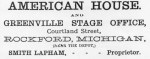 My maternal 5th great grandfather, Smith Lapham, was a pioneer, moving into the state after working on the Erie Canal, and eventuallyheading up the Grand and Rogue River until he settled in Kent County, there becoming a
 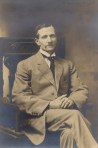 farmer and entrepreneur in a little town originally known as Laphamville, as well as serving as a State Senator in 1858.
My maternal great grandfather, Cornelius Shea, I believe moved in the 1880s from Upstate New York to Michigan with a few of his brothers to work in and around the lumber camps in Leelanau County, Michigan, then later moved down to Grand Rapids to work in the Furniture industry.
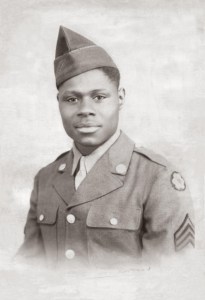 And finally, my paternal grandfather, Levie Trotter, was part of the Motor City, moving his young family from Arkansas to Detroit in 1951, and working for Chrysler Corporation for 32 years.
This is a small sampling of the generations of hard workers that I can claim as family—each very different but each part of an important time in Michigan’s economic development. And likely you’ll hear more details about all of them in blogs to come.
Happy Labor Day!
Jess
So Henry R. Massy dropped off the radar in 1869-70, as far as I could tell. But I was slowly able to expand what I knew about him before then–including finding out he was a replacement soldier in the Civil War. My only thought to move forward was to try following that lead. I found Henry Massy who served for the Michigan Infantry Civil War in a pension index now living at the time in Latham, Logan Co, Illinois and requested his pension record.
 I was blown away when the packet arrived. True to form everything was complicated for Henry. There was an extensive back and forth in the file because he was forced to prove his identity. He had changed his name to Harry or Henry (he used both) R. Allison and remarried a widow named Nancy Stinnett in 1876. In the pension he describes his police service, but claims he was never previously married and had no heirs. His pension request was approved with a special note about the way he signed his middle initial “R.” And that’s exactly what helped me to solidify the connections. He signed his oath to the police force, and he signed his enlistment and pension paperwork with the same funny “R.”
As an additional note, I was playing around on Ancestry on a day after they started picking up more scanned newspapers and looked for obituaries in the Logan Co. area for H. R. or Nancy and I came across a number of articles. One featured a Harry Allison and friend who went into Decatur and were charged with drunkenness, fined and asked to leave town. I don’t know if it’s really him. There was one other Harry in the county. But given other things I’ve seen… It’s certainly possible.

Decatur Herald, 3 January 1908
So, now I hope to find some time to slip away from FGS and swing back up to the Logan County Genealogical & Historical Society’s research room to see if I can round out any more of Henry’s story, as well as over to Lake Bank Cemetery to photograph Harry and Nancy’s headstones.
Happy Hunting,
Jess
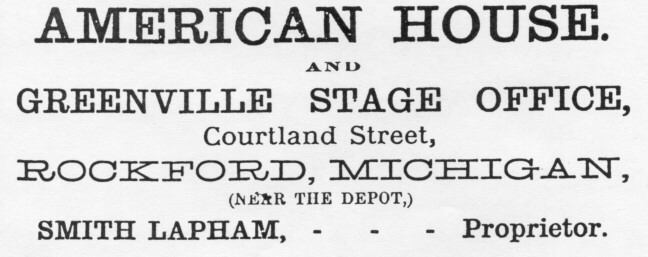 My maternal 5th great grandfather, Smith Lapham, was a pioneer, moving into the state after working on the Erie Canal, and eventuallyheading up the Grand and Rogue River until he settled in Kent County, there becoming a
  farmer and entrepreneur in a little town originally known as Laphamville, as well as serving as a State Senator in 1858.
 And finally, my paternal grandfather, Levie Trotter, was part of the Motor City, moving his young family from Arkansas to Detroit in 1951, and working for Chrysler Corporation for 32 years.

 Genie Road Trip