Needless to say, the pandemic has totally thrown my year, but I’ve been sitting on a version of this post for a while. I’m not sure I’ll be able to get back into a more normal run of posts anytime soon, but I will endeavor to at least post more.
Some of you know I was working on a presentation on occupational records and resources for a Virtual Genealogical Association webinar last week. It was another presentation that was truly meant to get researchers out and about looking for information in libraries, archives, and museums. Then… pandemic. But, in the retooling of the presentation, I found so many interesting and cool online resources that I really thought they were going to have to cut me off for going too long. Suffice to say, there is much that can be done online—but you should also be making the list of places to visit when it is safe for you to do so too.
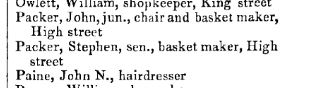
I’ve talked about examples of occupational records/resources on the blog before: Henry R. Massy’s Police Force Application, Grandpa Bailey’s work photo from Kirkhoff Manufacturing, labor union publications. But being in lockdown gave me time to explore other resources. For example, did you know that Ancestry has record sets like U.S., Baseball Questionnaires, 1945-2005—a collection of self-completed surveys including the likes of Roger Marais, Ken Griffey, Jr (and Sr.), or former Detroit Tiger Brad Ausmus. Or maybe you need a record set more down to earth? They also have a collection called Wisconsin, Employment Records, 1903-1988—including the four occupations for which one needed a license: education, barbering, watchmaking, and boxing.
Family Search has a variety of collections like the Certificates of admission to the Guild of barbers, surgeons and chandlers, Shewsbury, 1745-1792 (UK), the Business license records (Pike County, Ohio), 1816-1854, 1877, or the Peddlers and Show Licenses, 1852-1866 (Decatur County, Georgia).

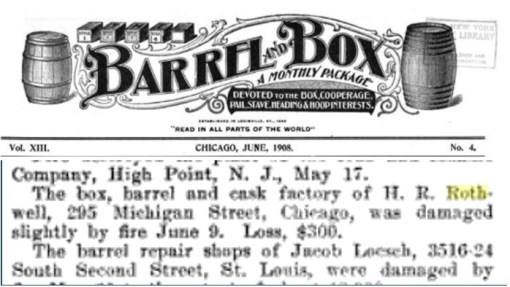
Searches in WorldCat or ArchiveGrid can net more collections—such as the Arkansas State Board of Barber Examiners files of inactive barbers, series III, 1937-1994 at the Arkansas State Archives including a picture of my Great Uncle Fred Elliott. But so can a search on Google. That’s how I found a number of industry journals with mentions of family members. Like the notice of the fire at my 4th Great Uncle H. R. Rothwell’s barrel, cask and box factory in Chicago, Illinois in on June 9th 1908 in The National Cooper’s Journal and The Barrel and Box.
“But I only have Farmers!” I hear you. I know. I have my fair share, but check out the community your family is from to see if any of the farm books or store ledgers for the area survived. I can’t promise they’re out there, but it’s worth a look—especially if you’ve hit a brick wall.
Or maybe your find is waiting for a building renovation and will find its way to Facebook, like this. It a grocer’s card that a pizza joint in my mom’s hometown found while renovating. I totally wanted it to be our George, but then it settled in that there were three George Porter’s in town at that time (and we’re only related to two of them)—needless to say that’s the one we have no claim to. But, wow! What a neat job-related find sitting out there on social media for someone.
Happy hunting!
Jess


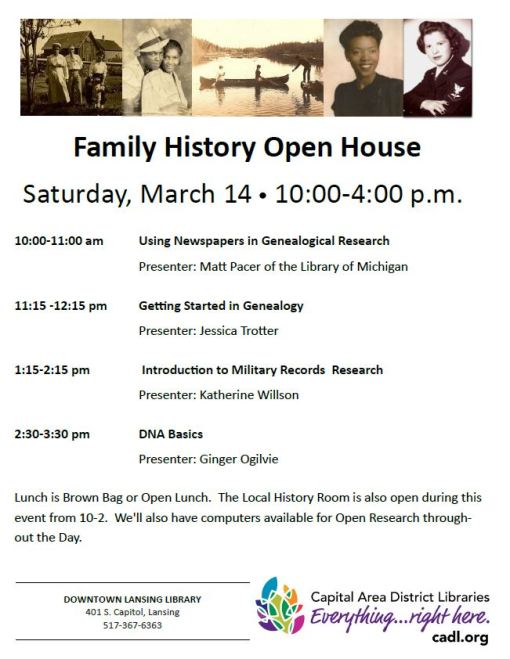
 My last event of the month was presenting at and participating in a joint program hosted by our local African American genealogical society and two area churches and I was overwhelmed by the turnout, interest, and discussions. And listening to the many speakers, it reminded me that in my community there is so much experience to be shared, stories to be told, support to be given. Hearing how these avid researchers worked through their brick walls gave me so many ideas for my own. Sharing that I as one of the presenters still have a ton of brick walls, I think helped other newer genealogists. Comparing notes with new acquaintances researching in the same communities gave everyone in the discussion new ideas.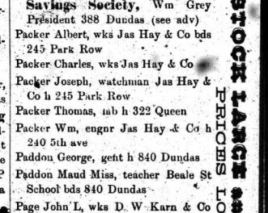

 So eight years ago I published my first post and it’s been a crazy ride since then. I credit the blog with helping me improve as a researcher, connecting me with friends and family, and giving me a fun outlet–that also pushed me to further explore my roots. And while I haven’t been that consistent–especially in the last couple of years–I still want to keep it open and (ideally) post more often about what’s happening.
 Genie Road Trip