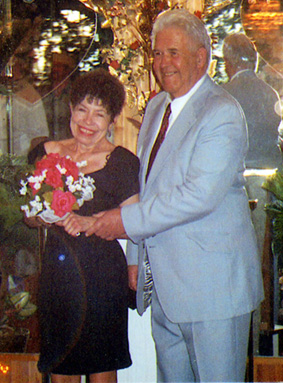
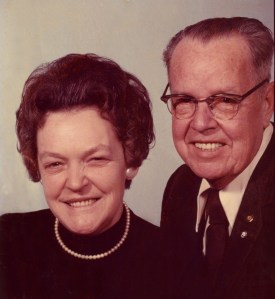
Pauline & Harold Bailey

It’s been 22 years since my Step-Great-Grandmother Pauline Bailey died. I didn’t spend a lot of time with her but I associate her with the extended family Christmas’s and baby showers she hosted—particularly those held at the Community Room of the Towers in downtown Rockford, Michigan—though I know she was also very involved in the American Legion Auxiliary, Merrit Lamb Post #102 as well.

She was born Pauline Boukamp and had children from a previous marriage (or marriages?) before she married my Grandpa Bailey within a year of my biological Great Grandmother’s death. She was a very strong personality (like most of the women in the family). And, like Grandpa Bailey, she wasn’t related to me by blood but she was the Great-Grandmother I remember best.

For some reason I think of her whenever I see pastel mints.

Happy hunting.

Jess

Uncle & Mom, c. 1952

Someone in this picture is celebrating a birthday this week!

This is my Great Uncle and my Mother taken outside of my Great Grandparent’s home on Maple Street in Rockford, Michigan.

Happy hunting,

Jess

Loving the fashion in this one! Load the full picture and check out the details on the pants. That’s me down front, my next youngest cousin, Eric, is looking concerned in the middle, and his father/my uncle looking on. This was taken at my grandparents home on Main St in Rockford, Michigan sometime around 1980-81.

Now imagine Eric with the body of The Hulk… it’s a startling transformation to say the least. We’ve come a long way.

I’m still wishing for spring and some time to play outside

Happy hunting,

Jess

I’ve had a few questions about connecting slaves and owners since my WMGS talk last month. This is not something I’m an expert in. But I am a good researcher in general so, my advice is to gather every bit of information you can on the former slave family.

  • Pay close attention to all of the locations associated with the family.
  • Look at any evidence of transactions you can—like land, produce, and labor.
  • Follow every side line—siblings, families that seem associated with the one you’re more interested in—African American or Caucasian.
  • Use the Slave Schedules to find possible owners based on age and sex—if you don’t have a better idea start where they were in 1870 but be aware that families sometimes moved with freedom sometimes only a county over and sometimes much farther.
  • Search Slave Narratives through the Library of Congress, Documenting the American South, or in Ancestry.com
  • Search the Freedman’s Bank Records through HeritageQuest.com (often accessible through local libraries)

Once you’ve got a few possibilities start researching the slaveholding families in just as much detail as you would your own. Look at land and probate records, and hunt down plantation records (these could be tucked away in university and state archives).

And if you don’t find that magical record that states clearly the connection between slave and owner, then, look for patterns. For my family that meant recognizing that you could plot the places where my ancestors appeared on a map and have it match up with a certain set of westward moving slave owners—so while I’m not certain which slaveholder was ours the odds are it’s one of a relatively small number of interconnected families.

Unless you are unbelievably lucky this will be time consuming and could take years to track down the right records. Be persistent, flexible, and thorough.

But don’t take my word for it. Track down these great resources for more detailed and expert help:

  • Burroughs, Tony. 2001. Black roots: a beginner’s guide to tracing the African American family tree. New York: Fireside Book.
  • Gates, Henry Louis. 2007. Finding Oprah’s roots: finding your own. New York: Crown Publishers.
  • Howell, Barbara Thompson. 1999. How to trace your African-American roots: discovering your unique history. Secaucus, N.J.: Carol Pub. Group.
  • Smith, Franklin Carter, and Emily Anne Croom. 2003. A genealogist’s guide to discovering your African-American ancestors: how to find and record your unique heritage. Cincinnati: Betterway Books.
  • Witcher, Curt Bryan. African American genealogy: a bibliography and guide to sources. Fort Wayne, Ind: Round Tower Books, 2000.

Happy hunting,

Jess
Trotter, P.I., c. 1962

This one is fun on so many levels!

This is my father in what he calls a P. I. hat and shoulder holster with toy gun—probably a Christmas present around 1962. I think it’s the actual outfit that keeps throwing me—in particular the pattern of his sweater? And I’m pretty sure that’s my oldest uncle grinning in the background.

I believe this photo is taken near their home in the Brewster-Douglas Housing Project in Detroit, MI.

Happy hunting,

Jess

So, I’m hoping we’ve hit the end of weather like this. Here are my Mom (the tallest) and her siblings outside my Great Grandfather’s house in Rockford, MI sometime in the mid to late 1950s.

Happy hunting,

Jess

The Johnson Kids, c. mid. 1950s.

I am currently experiencing home hardware issues but I still couldn’t miss Wordless Wednesday.


APP0074

This is my mother’s unintentional version of the Victorian Hidden Mother—which I learned about at the blog The Museum of Ridiculously Interesting Things

That’s my brother and I (and Mom behind the tree) on the Michigan State University Campus.

Happy hunting,

Jess

Someone’s birthday is this week!

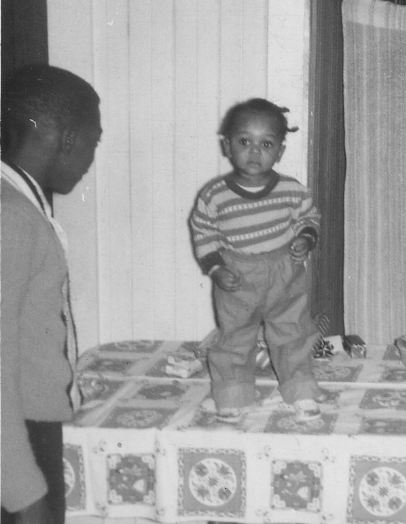
Trotter Uncle, 1966Happy hunting,

Jess

Ethel & Donald Keen, Valentine's Day 2001So my Gran has managed to cram a whole lot of life events into one week and today’s is the anniversary of her making a slightly more honest man of my Step-Grandfather, Donald Keen. They tied the knot on Valentine’s Day at The Hitching Post, in Las Vegas, NV in 2001 after about 17 years together.

Happy hunting,

Jess

This young lady’s celebrating her birthday this week!

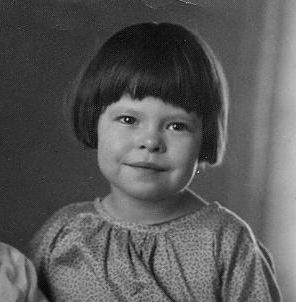
Grandma EthelHappy Birthday, Grandma!

Happy hunting,

Jess