September 2011
Monthly Archive
September 29, 2011
It’s Banned Books Week and the freedom to read is something I feel very strongly about. It is also something I now strongly associate with a particular portion of my family.
I am very proud and thankful to be part of a relatively close-knit set of readers in my family—including my Gran, Mother, Aunt, and Cousin—and I think a rather telling illustration of us (and most of the women in our family) is one that comes from our association with books. We love them! We carry around stacks of them. We find it hard not to stop in bookstores. We love our libraries. We just LOVE books! And we love sharing them, hearing about them, talking about them… So, imagine our reaction when we started hearing about this highly touted and increasingly maligned children’s series from Britain in the late 90s and early Aughts.
J. K. Rowling’s Harry Potter series probably would have gone totally unnoticed by us. We were all pretty much beyond reading books for that age group. But then the news stories started with parents up in arms over the exploits of a tween wizard and his friends. Really? Then came the sermons, challenges, and outright burnings—so much energy for a book that was already an international bestseller. It all got our attention.
So, what was our group of educated and responsible readers to do?
Read them, of course! There had to be something good there. We are a fine crowd of contrary women. Do not tell us what we should not read—it only infuriates and intrigues us. We are an example of what Ralph Waldo Emerson meant when he commented, “Every burned book enlightens the world.” We read them, re-read them, and shared them with others.
For more information on Banned Books Week check out the American Library Association’s site: http://bit.ly/ntsy9P or Banned Books Week: http://bit.ly/o5dS6h
Cheers,
Jess
September 28, 2011
I still have Robert Shea on my mind…

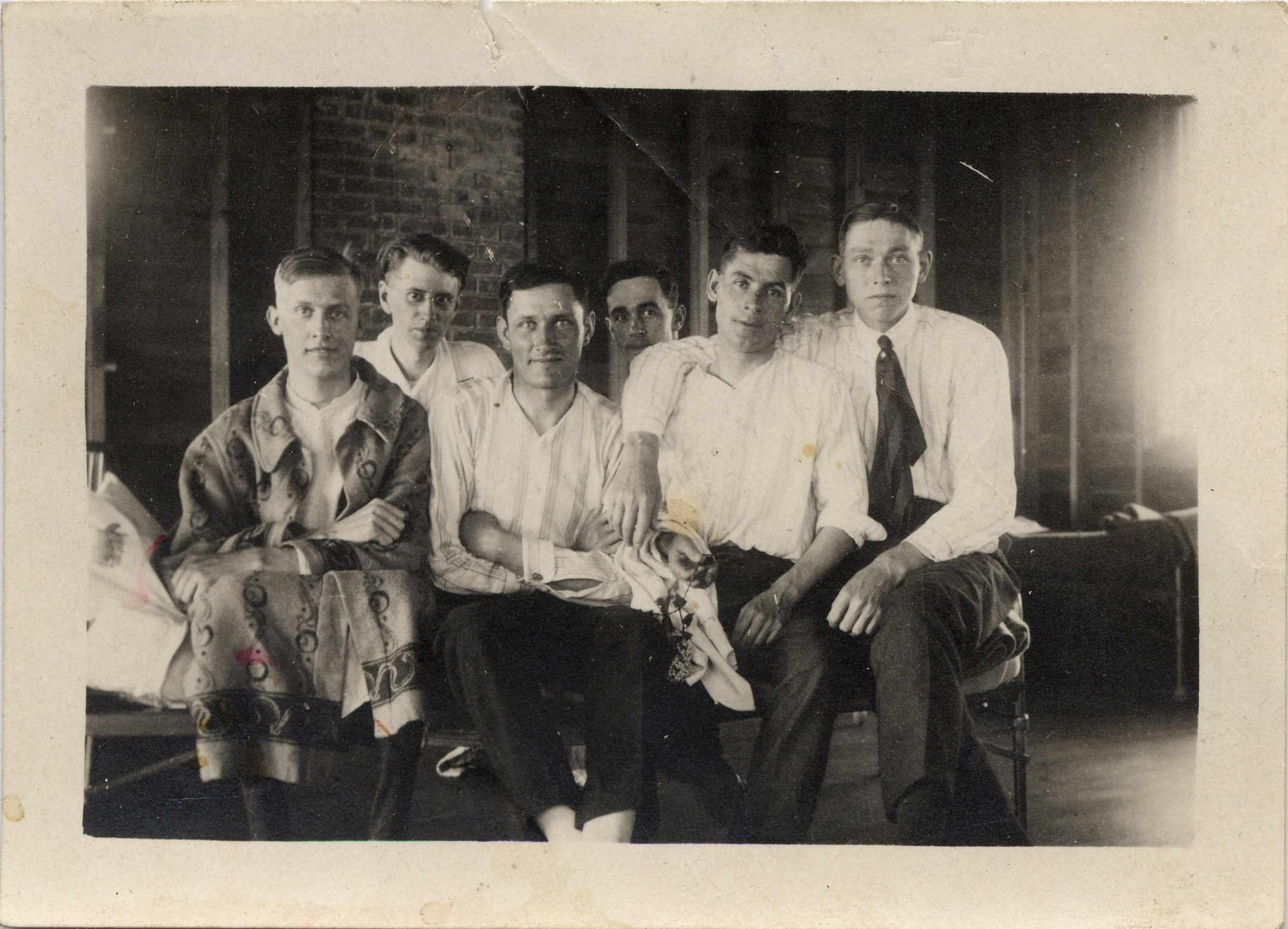
My great grandfather, Robert James Shea, was a tuberculosis patient at the Michigan State Sanatorium, in Howell, Michigan, around 1920. It’s there that he met my great grandmother, Cora Helena Packer who was also a patient. This shot is from one of the men’s dorms. Robert is the second gentleman from the right. None of the other men are identified. Within the family we have a number of group shots from the Sanatorium. The originals reside with my great aunt.
Happy Hunting,
Jess
September 24, 2011
 I’ve been thinking a great deal about my great grandfather, Robert James Shea, and his family lately. I’m not sure if it’s because I’ve been going through my files and photos—I probably have more from the Packers and Sheas than any other branch of my family—or because I decided to inventory my postcard collection which includes a stack related to the Michigan State Sanatorium in Howell, Michigan where he was treated for Tuberculosis and met my great grandmother as a fellow patient. Or maybe it’s because I’ll have a chance to pass through that part of Michigan where he was born in the Leelanau Peninsula next week. Regardless of the reason, Robert Shea is on my mind.
He was born 25 Jan 1888 in Empire Township to Cornelius and Ellen (Cunningham) Shea, the first of their nine children. 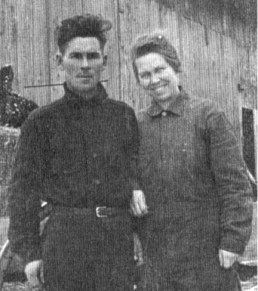 He was listed as a farm laborer in the 1910 Census but by 1920 he had been admitted to the State Sanatorium. He met my great grandmother, Cora Helena Packer, there and they were married in Grand Rapids in 1922. Their first two children were born there—my Grandmother, Ethel, and her younger sister, June. In the 1930 Census Robert was working in an upholstery shop and the family lived in Tallmadge, Ottawa County. In 1931 their last child Robert Arthur was born. In April of 1933 Robert finally succumbed to complications from his Tuberculosis at Kalamazoo State Hospital.
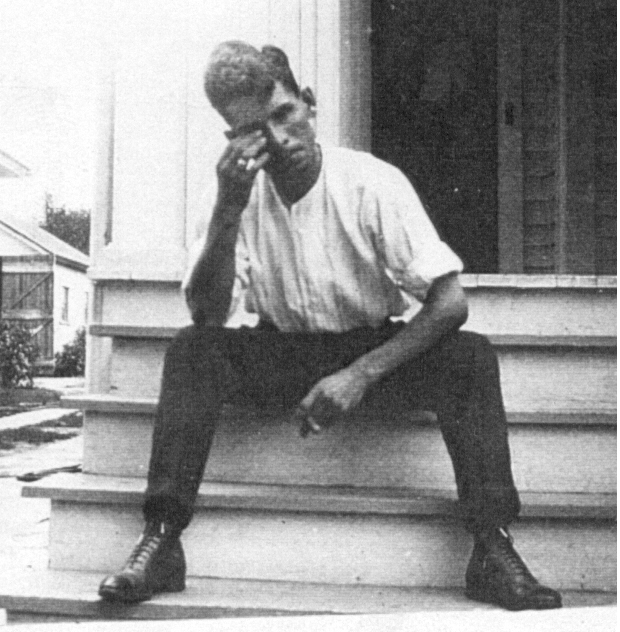
 He’s a character I really only know from pictures and the stories my Grandmother and Great Aunt share—and Gran was only 8 when he died. In every picture is a dark, thick head of hair that seems often unruly. The more unruly shots make me think of Lyle Lovett (I’m a big fan). And he had a darker complexion—an olive undertone—that he passed on to Gran and likely her three children. It’s a running joke that they all tan darker than me.
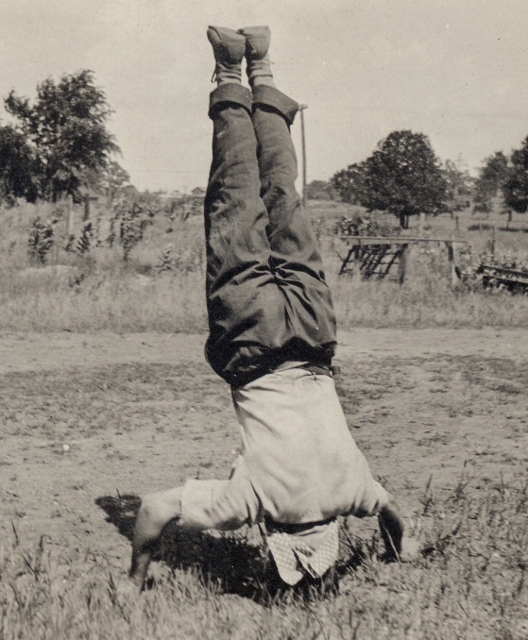
He didn’t have an easy life. The idea that he likely had a lung removed as part of his TB treatment but was still working as a lumberjack before he died has always struck me as sad. But the photo evidence suggests he was able to have fun and find joy in the times that he had.
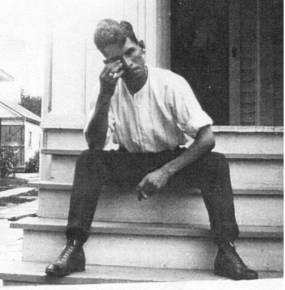 As with all my other lines, I am always searching to add more depth to that disjointed list of facts, so I plan to continue my research on Robert (and Cora) by looking into the history and records held by the State Archives on the Michigan State Sanatorium at Howell and the Howell Carnegie District Library. I’m quite curious about what their routine would have been like especially since they were patients when the “fresh air cure” was a popular approach to TB treatment.
For more information on The Michigan State Sanatoria check out this great 2009 article from SeekingMichigan.org: A Healing Place.
All photos are from the collection of my Grandmother and Great Aunt.
September 21, 2011
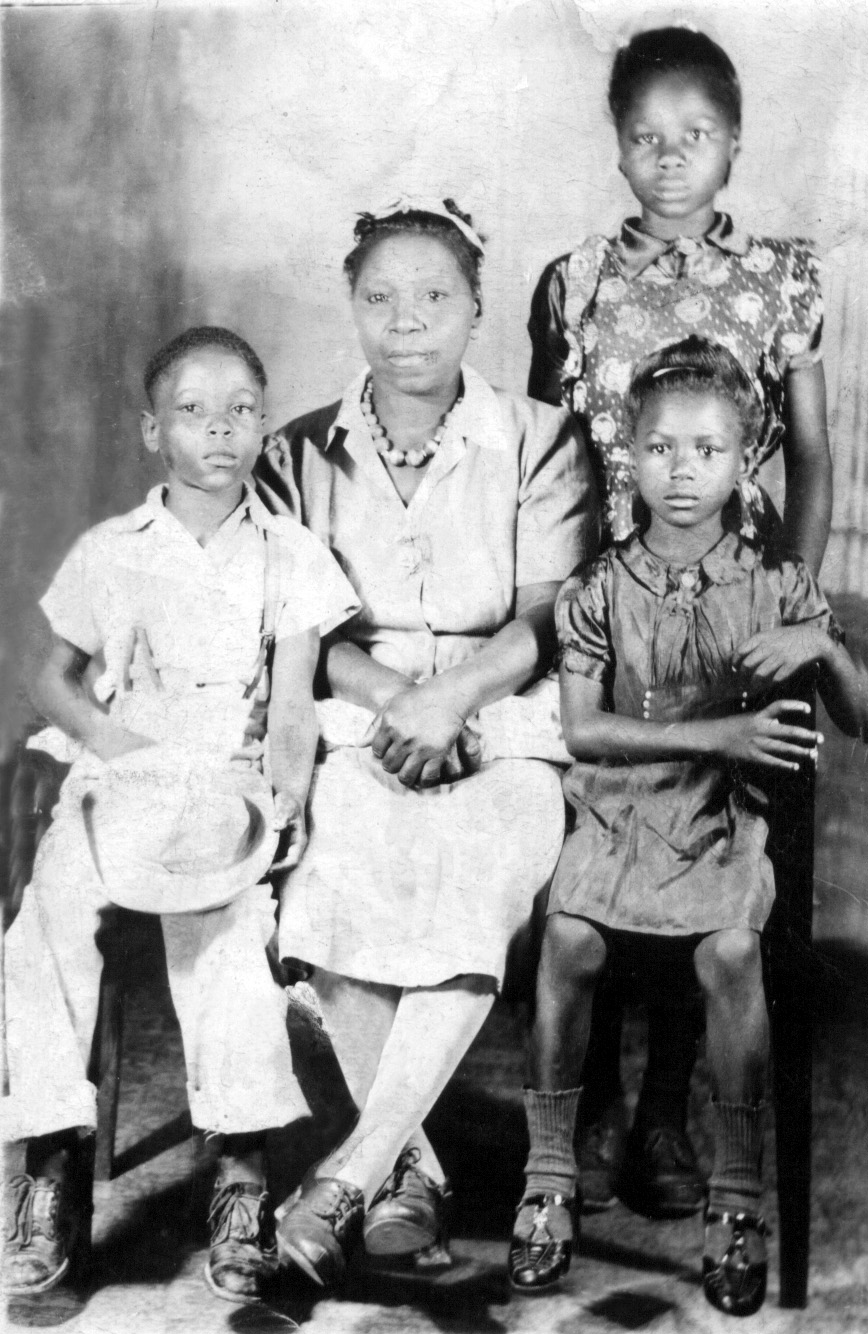
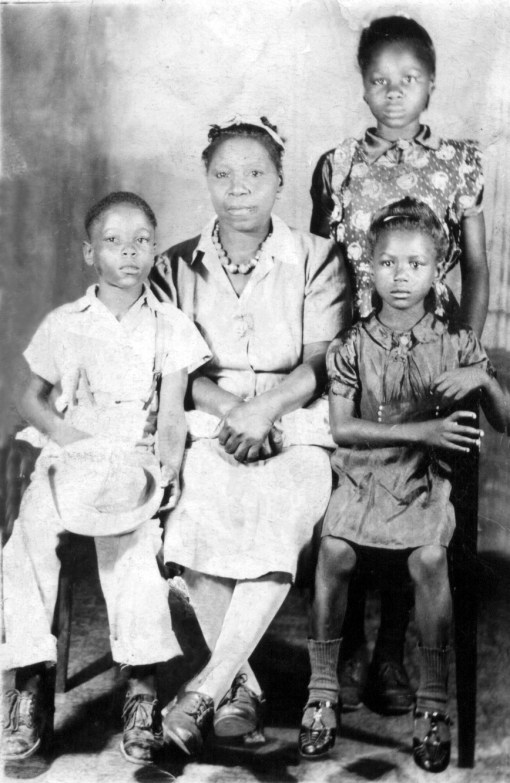 This is a shot found among my grandparents photo collection. This is my great grandmother, Rhoda Rogers Trotter, and three children. There have been great family debates on the identity of the children but I am assured there was only one Rhoda. It was probably taken in Bradley County, Arkansas. I don’t have a lot of information about the Rogers family. I know Rhoda (also called Rhodie) was the daughter of Pete and Mattie (Martin) Rogers. I believe she was born in 1894 and she died in 1981. She married my great grandfather, Harrison Trotter, in 1911 and they had 15 children.
Happy Hunting,
Jess
September 19, 2011
I took a very short road trip today with a run out to the Archives of Michigan to do a little research using their Naturalization records. For those of you not familiar with these, the State Archives has made this very easy for many researchers with great online finding aids for many of the counties in Michigan, with one notable exception—and of course the one I have the most relatives in—Wayne County (which is not to say they’re not trying). So, I went with a few names with exact index information that I just wanted to print or copy and a few names that I knew I’d have to work for—if I was lucky enough to find anything.
Interestingly enough, it became a bit of a lesson in being prepared and flexible. When I arrived I was behind another researcher who was fairly certain that the rules about not taking in coats, pens, etc. didn’t apply to him, which was a tad uncomfortable to watch the attendant have to deal with—though she was great. But it made me think about some of the other places I’ve researched lately and some of the encounters I’ve witnessed… and the librarian in me couldn’t help but take over for this post.
I’m sure I’m preaching to the converted (mostly) but as a researcher, a librarian and someone who has more than once worked in situations such as these:
- It works a lot better for all involved if you know what you’re looking for—go in with a few solid goals or record groups to work with.
- Know the rules of the place you’re visiting (and follow them)—including be aware of what they allow you to bring in.
- Be patient—even the best staffed institutions can be overwhelmed with researchers and most places, due to the economy, are not staffed or equipped optimally for demand.
Many places have clearly laid out rules and a lot of collection information on their websites. Most have email and you can request rules and inquire about records ahead of time if you can’t find them online. And, of course, telephones work too.
None of this is new… but it doesn’t hurt to throw this out into the aether as a friendly reminder.
As it happened, there was a pretty large group already working on readers and printers so, I wasn’t as successful as I’d hoped to be. But it was easy enough to make arrangements to leave my list and have the copies mailed to me. Plus, I did hit on one of my Wayne County folk—needless to say it wasn’t H. R. Massy—but it appears my 5th Great Uncle, Captain Rowland Hill Alison, did start his naturalization paperwork in Wayne County.
Happy (and respectful) hunting!
Jess
September 14, 2011
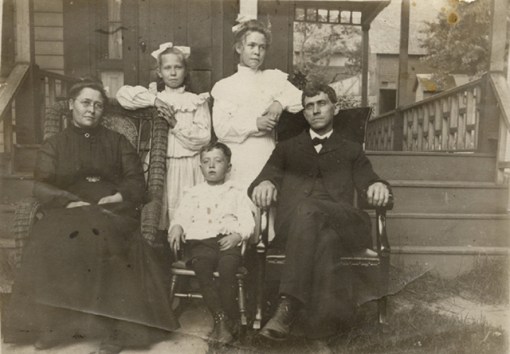
These are my 2nd Great Grandparents Flora Jane (daughter of Henry R. Massy) and Cornelius Packer and three of their children: My great grandmother Cora, her older sister Pearl, and their younger brother James Arthur. The photo was likely taken at their home 160 Shirley Street, Grand Rapids, Michigan after the death of their oldest child, Ethel, in September of 1900 and prior to 1905 when their last child, Grace, was born. The original resides with my great aunt.
September 11, 2011
So, day three was a little more relaxed. If one compared my post and the conference schedule you might notice that somewhere along the way yesterday I missed a session. Well, today it was two. I was admittedly suffering a little from overload but I also spent a few hours helping to man the booth for the Michigan Genealogical Council. It gave me a chance to interact with people in the Exhibit Hall and, in my spare time, work on organizing my thoughts about all the interesting information I had been given this week.
Session-wise, I attended Tony Burroughs’ presentation on documents available from before the Chicago Fire—adding Chicago to my Roadtrip Wish List. I went to a super helpful and practical presentation by Thomas McEntee, of Geneabloggers, about creating a blog (I’m still a newbie). I caught one more excellent presentation by Thomas Jones on the Genealogical Proof Standard, and I finally made it to one of Tim Pinnick’s presentations—the one on African American Migration. They were all helpful, interesting, and… about the last bits of information I could handle for the week.
My Springfield experience has been great and I know I’d love to come back again with a more careful plan to research the Massy, Allison, Stinnett and Martin contingent of my family—including wandering around Lincoln, Latham, and Decatur. Besides, I fell in love with Andiamo, GianFranco’s Italian Restaurant & Deli, and Prairie Archives—all within a block of the Old Capitol—and I’d love come back and visit all three.
Anyway, thanks to all who have made this such a great first time experience for me at FGS including all the instructors and everyone I met—but especially to the kind ladies who let me drag them down to Illinois a day early and the rest of the wonderful and welcoming Michigan contingent!
Signing off from Springfield,
Jess
September 10, 2011
Posted by JessLibrarian under
Classes/Workshops | Tags:
FGS2011 |
Leave a Comment
Day two started wet! I had grand plans to go for a walk and have breakfast at Andiamo in Springfield (which I very much enjoyed for lunch the day before) but it was pouring and somehow it wasn’t worth the effort. But the day, while often gray, was was still a productive one and it was dry every other time I wandered out of the Convention Center and hotels.
I attended a BCG Seminar, a very informative session by David McDonald for beginners to Wisconsin Research, a class on African American Digital Research presented by Tony Burroughs, and another great beginner’s guide to records in Ohio presented by Diane VanSkiver Gagel.
I came out of the day with another set of research destinations added to my list and the start of two more research plans and trip folders—so far still in my head. I’ve been given a number of great tools and ideas to jumpstart my research in both Wisconsin and Ohio as well as a few solid locations I want to check out like the Wisconsin Historical Society Library and Archives and the Ohio Genealogical Society’s new Research Center in Bellville, OH.
If anything my only complaint about the conference setting is that there isn’t enough time to sit back and digest—because I want to go to every session, or stay up talking to folks, or totally crash because of information overload.
Happy Hunting from Springfield!
Jess
September 9, 2011
This was my first full day at FGS2011 and I had a blast from plenary to most of the way through the Society Showcase—I did sneak out before 8 pm. My session choices for the day were:
- The Jones Jinx: Tracing Common Surnames presented by Thomas Jones
- Searching Your African American Roots on Ancestry.com presented by Lisa Arnold
- ICAPGen Application Forms Presented by Kelly Summers
- Getting Beyond the Bare Bones presented by Thomas Jones
I enjoyed and got a great deal out of all of them, but I think my pick of the day would have to be “The Jones Jinx.” So, a very big thank you Kris R. who told me that Tom was great when I told him I’d been going between that and another presentation! The case study layout of the presentation—a walk through on finding the parents of his relative, C. R. Jones—was one that particularly clicked for me. I came out with a list of things I wanted to work on with various ancestors (common surnames or otherwise)—including looking at the set date of birth that H. R. Allison/Massy uses all over the place that doesn’t quite match up with other information I found. Or starting over completely on my Johnson women in Arkansas—a current brick wall line. If you get a chance to see a lecture by Tom…Go!
The Ancestry class wasn’t really new material for me but it was still interesting to hear and it reminded me that with all sites: you’ve got to keep checking back to see what’s going on. I’ve been so focused on what’s worked for me (ex. FamilySearch.org’s Arkansas Marriage Records) that I sometimes forget to check out the updates elsewhere that may move me along in my research.
The ICAPGen session was interesting, not because I’ve decided to get certified but, because it helped me to think about the range of resources and geographic areas I have worked with over the years—as well as the range of courses I’ve taken.
And finally, I attended Tom Jones second presentation because I loved the first one. And I wasn’t the only one, because that room was absolutely packed! This was, again, very practical advice but it was laid out with examples that I found personally useful as well as interesting to hear about.
So, I’m deeming it a successful day. I’ve met and chatted with tons of interesting people and already learned a lot… And there’s still two days to go.
Happy Hunting from Springfield!
Jess
September 8, 2011
We had an uneventful trip to Springfield, IL but before I start talking about FGS2011 I spent my first full day in Illinois on a side research trip to Logan County (about a half hour north of Springfield)
In all my prep and planning I missed the resource most dear to my heart, at least until the night before my side roadtrip. Then it finally dawned on me that the Lincoln Public Library opened two hours ahead of the Logan County Genealogical and Historical Society Research Center. So, I could look at their local history collection and newspapers if I revised my plans and got up and out of the hotel in the morning. So with a new plan… I still got out of town later than I planned but I was on the road to Lincoln at a reasonable time.
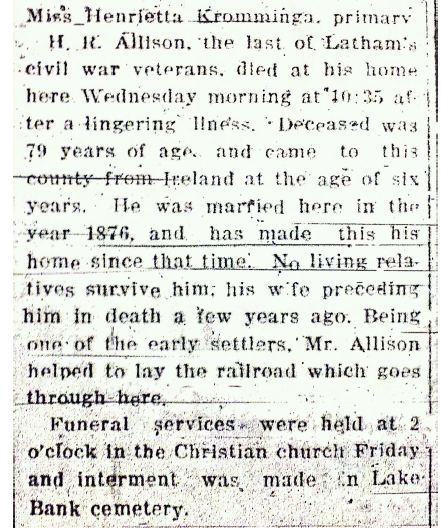
 The trip itself was relatively uneventful though I miss having a handy sidekick and map reader. I took a few wrong turns in Lincoln and drove around the block a few times but I made it to their lovely 1902 Carnegie Library with more than enough time to look through microfilm newspapers. The staff was very helpful. They set me up at a reader/printer with my first reel loaded and I was off. My find of the day was H. R. Allison’s obituary. It was a lovely moment only slightly marred by the number of times it took to get it printed legibly. I did spend additional time looking for his wife’s obituary as well—but to be honest too much time looking at microfilm makes me ill.
Next stop was walking around the block to the LCGHS Research Center where a genial volunteer loaded me up with resources. Oddly enough, they had shelves of binders with obituaries but neither Harry nor Nancy was among them—I am so glad I finally remembered to try the library. But, if you have Logan County family, they have a Centenarian who is indexing the local sections of Lincoln newspapers. Not all of them are indexed yet, but there are 80 binders plus if you have time to work through them. I found a couple of interesting tidbits that way. For example, I don’t think I knew that Harry had been a village trustee on the People’s Ticket in 1899. There’s enough there that I may make a return trip to the Center again someday or at least contact one of the society researchers for assistance.
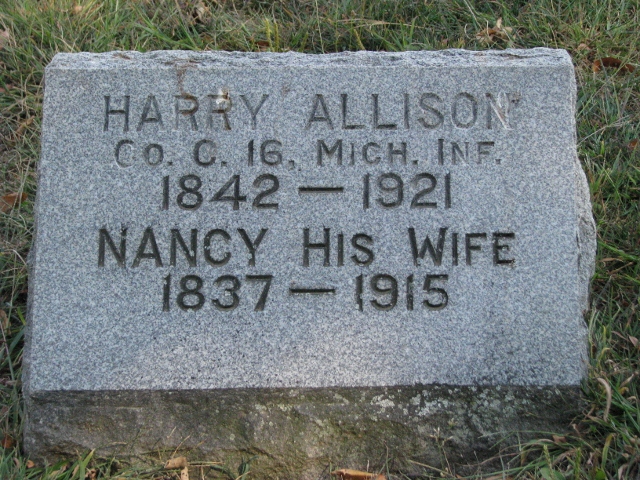
The last leg of my trip was to take a long drive down country roads to what felt like the middle of nowhere to a well-kept cemetery set way off the main road. Like my time in Lincoln this took a little circling but this time it was on foot. I had a rough layout of the cemetery from LCGHS and a location for Harry and Nancy (Thank you, Logan County GenWeb!) but I didn’t really understand the map until after I found them. I ended up getting in my exercise walking through the majority of the cemetery before I found the headstone on the back in the lot of his stepdaughter’s family. When I found him it felt like I was coming face to face with someone I’d been chasing for 16 years… I’ve finally caught him but I still have so many questions.


But that’s for another time.
Happy hunting!
Jess
Next Page »



 Genie Road Trip